-
Written by:
Asad Abdullah Zafar

- Published
- 8 min read
- SEO
Quick answer: There is no numbered ranking in ChatGPT. "Ranking" means being one of the businesses it names when someone asks who to hire or what to buy. ChatGPT names the businesses that many independent sources agree on, so you rank by letting its search crawler reach your site, saying plainly on your own pages what you do and for whom, getting onto the lists, directories, reviews and forums it reads for your category, and keeping your business facts identical everywhere. Measure it by asking the same buyer questions every month and recording who gets named.
More customers now ask ChatGPT for a shortlist before they ever open Google: "best accountant for a small online shop", "which Shopify agency should I hire", "good dentist near me open on Saturday". The businesses in that answer get the enquiry. Everyone else never knew they were in the running.
We run Loop2Tech, a studio based in Karachi, Pakistan, that does SEO, AEO and GEO for businesses worldwide. This guide explains, without jargon, how ChatGPT picks the businesses it recommends and what you can do about it this month.
What "ranking in ChatGPT" actually means
On Google you rank in position one, two or three. ChatGPT gives one written answer, usually naming a handful of businesses, sometimes with a map, ratings and links. You are either named or you are not, and the order changes from one conversation to the next.
Two things are worth separating:
- Being named. ChatGPT mentions your business as an option. This is what most owners mean by ranking, and it is what this guide covers.
- Being cited. ChatGPT links to your page as a source for its answer. That needs focused, quotable pages, and our guide on how to get cited by ChatGPT covers it step by step.
How ChatGPT decides which businesses to name
ChatGPT draws on two kinds of knowledge:
- What the model already learned. During training it read a large share of the public web. Businesses that were widely written about before then are part of what it "knows", which is why big brands get named even without a search.
- What it looks up live. For most "best" and "near me" questions, ChatGPT searches the web, reads the pages that come back and writes its answer from them. This is where a smaller business can win, because it depends on what is published about you today.
When it searches, ChatGPT is mostly not reading your homepage. It reads pages about your category: "best of" lists, directories, review sites, Reddit threads, news articles and comparison posts. A business that appears on several of those, described the same way each time, looks like a safe recommendation. A business that only talks about itself on its own site looks like an unknown.
How to rank in ChatGPT: seven steps
1. Check where you stand today
Write down ten questions a real customer would ask, such as "best [your service] for [your type of customer] in [your city]". Ask each one in ChatGPT, in a fresh chat, and note who gets named and which sites are linked. Repeat the same questions every month. Our guide to measuring AI citations and share of voice turns this into a simple tracking sheet.
2. Let ChatGPT's search crawler in
OpenAI runs a crawler called OAI-SearchBot that collects pages for ChatGPT search. OpenAI says that if you block it, your site will not be shown in ChatGPT search answers. Check your robots.txt, and also check that your firewall, security plugin or hosting is not quietly blocking it. This is the most common reason we find a business missing entirely.
3. Say plainly what you do, for whom and where
ChatGPT can only recommend you for what it can read. Each service page should say, in plain sentences near the top, what you do, who it is for, where you work and what it costs or how it is priced. "We help businesses grow online" gives it nothing to match. "We build Shopify stores for fashion brands in the UK, from US$650" does. Our post on AI-friendly service pages shows the pattern, and answer-first content explains how to structure the rest of the page.
4. Get onto the pages ChatGPT reads for your category
Run your ten questions again and look at the links ChatGPT shows. Those are the pages it trusts for your category. Work out how to get onto them: ask to be added to list articles, claim your profile on the directories that come up, and answer real questions in the forums it quotes. Our guides to Reddit and AI recommendations and Wikipedia for brands cover two of the most common sources.
5. Keep your business facts identical everywhere
Your name, address, phone, services and areas should read the same on your website, your Google Business Profile, your social profiles and every directory. When sources disagree, ChatGPT is less sure the listings are the same business and less likely to name it. Our guide to entity SEO explains how to make your business one clear, connected identity across the web.
6. Earn reviews on public platforms
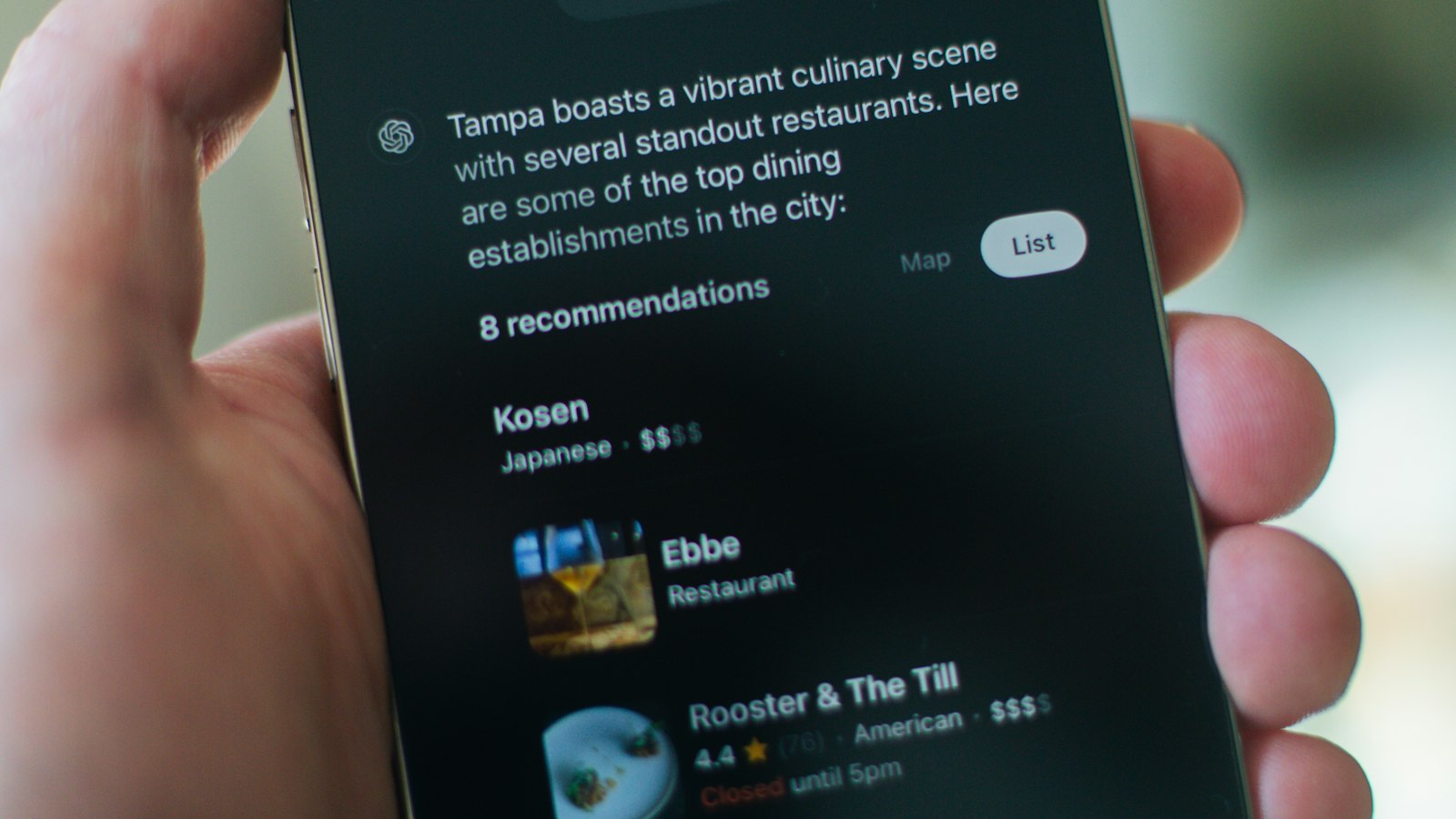
For local questions, ChatGPT often shows businesses with their star ratings, as in the photo above. Ask happy customers to review you on Google and on the review sites that matter in your trade. Never buy or write fake reviews. They break the platforms' rules and can get your listing removed.
7. If you sell products, keep your product feed clean
ChatGPT shopping recommends products from the feeds merchants share with OpenAI and sends the buyer to finish on the merchant's own site. OpenAI's merchant documentation lists the required fields, including title, description, price, availability, brand and images. Shopify and Etsy stores are included automatically; the feature is US-only for now. When we checked 162 Shopify brands, only 39% gave AI shopping tools a price, stock status and barcode together.
What does not work
- Asking ChatGPT about yourself over and over. Your own chats do not train it to recommend you to other people.
- Stuffing pages with "best" and "top-rated". ChatGPT weighs what other sources say about you far more than what you say about yourself.
- Relying on an llms.txt file. It is cheap to add, but there is no evidence that ChatGPT uses it to decide who to recommend. Our post on what llms.txt does explains why.
- Paying for a "guaranteed" ChatGPT placement. Nobody controls what ChatGPT says. A guarantee means someone is selling, not measuring.
How long it takes
Fixing crawler access and your own pages takes effect as soon as your site is crawled again. Being named for competitive questions takes longer, usually months, because it depends on lists, reviews and articles about you building up across the web. Track the same questions monthly so you can see progress instead of guessing.
As AI assistants start acting for customers, booking and buying on their behalf, the same groundwork carries forward. Our guide to assistive agent optimization covers what changes when the AI does the choosing.
How Loop2Tech helps
Our prices are fixed and published on our AI visibility pricing. The free AI Visibility Check shows what ChatGPT, Perplexity, Gemini and Google's AI answers say about you today and who gets named instead. The Full AI Visibility Audit, US$99, adds a prioritised fix list and a walkthrough call. Our AEO, GEO and SEO service, US$450 a month, does the work: your pages, your listings and the sources ChatGPT reads, with monthly tracking of who gets named. Read how our AEO, GEO and SEO services work, run our free audit, or tell us which questions you want ChatGPT to answer with your name. If you are comparing providers, our guide to AEO pricing explains what is worth paying for, and our monthly plan is there when you want it done for you.
Frequently asked questions
Can you rank in ChatGPT like you rank on Google?
Not in the same way. ChatGPT has no fixed list of positions. It writes a new answer each time and names the businesses that its sources agree on. You "rank" by being one of the businesses it names for the questions your customers ask.
How does ChatGPT choose which businesses to recommend?
For most buying questions it searches the web and reads pages about your category, such as list articles, directories, review sites and forums, then names the businesses that several independent sources describe consistently. Well-known brands can also be named from what the model learned in training.
Does SEO help you rank in ChatGPT?
Yes. ChatGPT's live answers are built from pages it finds through search, so pages that are crawlable, clear and well linked are more likely to be read. SEO alone is not enough, though, because ChatGPT relies heavily on what other sites say about you.
How long does it take to show up in ChatGPT?
Technical fixes such as unblocking OpenAI's search crawler take effect once your pages are crawled again. Being named for competitive questions usually takes months, because it depends on lists, reviews and articles about your business building up.
Can I pay to be recommended by ChatGPT?
No one can guarantee or sell a recommendation in ChatGPT's answers. What you can pay for is the work that makes you more likely to be named: clearer pages, open crawler access, better listings and a stronger presence on the sources ChatGPT reads.